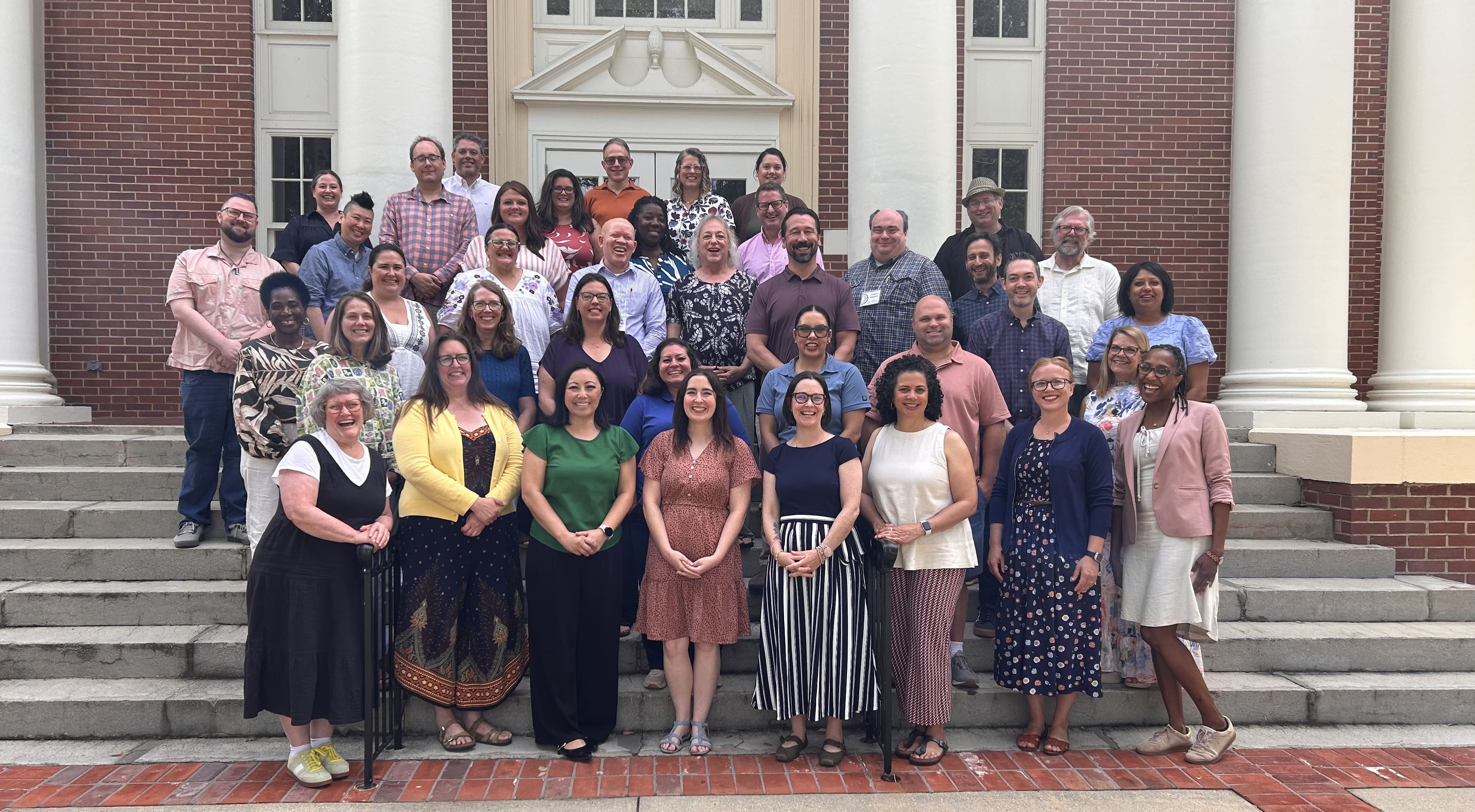
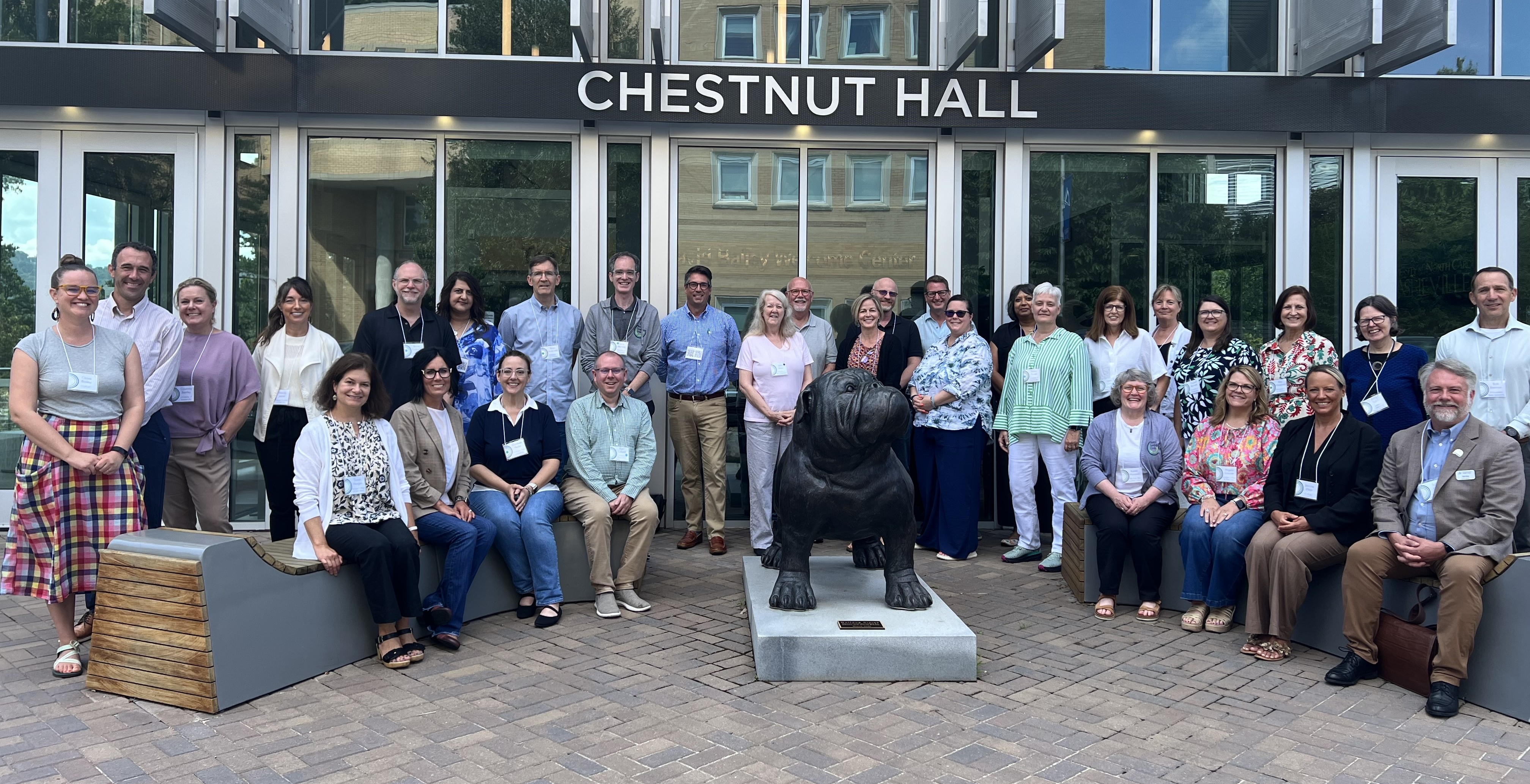
Scott Beard Leadership Circle

2025
2024
2023
2022
2021

Beard Leadership Circle: Change Management for Student Success

The Beard Leadership Circle is tailored to the unique needs of leaders at public liberal arts colleges. The BLC expands strategic skills, trust, and peer networks to help COPLAC professionals work effectively with their institutional missions, lead their units, and support student and faculty success.

The 2026 program will include a track for Student Affairs and a track for Academic Affairs, with some shared sessions of common interest. It is designed to promote interdivisional collaboration and to strengthen cross-campus networks to the benefit of students, both divisions, and the health of the institution as a whole. Campuses are encouraged to send representatives from both Student and Academic Affairs.

Who should participate in BLC 2026?
Early- to mid-career academic department/division chairs in Academic Affairs and Student Affairs leaders with five to eight years of experience who want to advance their leadership skills and are committed to participating in the BLC activities.
Why participate in BLC 2026?
The Beard Leadership Circle is an investment in the health of your institution at a time when we all face new challenges, current realities like state funding, enrollment challenges, changing student demographics, and ongoing demands on students, faculty, staff, administrators, and programs. 

COPLAC institutions have a different set of contexts for leadership than any other sector of American higher education. Our size and mission often separate us from larger public institutions, and our public focus, governance structure, and funding models often separate us from similarly sized private institutions. COPLAC campuses face similar needs and challenges in identifying, developing, and recruiting leaders who can make a compelling case for the public liberal arts mission.

BLC 2026 will address the following:
  • Reflecting on your leadership journey and identity
  • Gaining deeper exposure to a range of issues, approaches, contexts, challenges, and successes
  • Creating collaborative learning communities
  • Adapting and adopting practices that advance collaborative action

And will specifically focus on these topics and leadership skills:

Administrative Topics that Lead to Student Success Administrative Skills
Retention and Student Success Managing Change- Organizing Framework of BLC
Curricular and Co-Curricular Programming: Trends and Data-Driven Decision-Making for Student Success Effective Delegation and Collaboration
Navigating Policies and Federal and State Guidelines Working within Institutional Constraints
Workload and Life/Work Balance Administering with Emotional Intelligence
Assessing Organizational Structures for Student Success, including Reorganization Leading Colleagues: Accountability and Boundaries
Engaging and Mentoring Faculty and Staff The Art of Saying No
Strategic Visioning and Planning Fundraising Basics for Emerging Leaders
Crisis Management Community and Stakeholder Engagement
Onboarding New Employees Interdivisional Cooperation
What is the nomination process for BLC 2026
The Council of Public Liberal Arts Colleges invites your campus to participate in the sixth Beard Leadership Circle. The 2026 iteration will work with early- to mid-career academic department/division chairs in Academic Affairs and Student Affairs leaders with five to eight years of experience and features a virtual introduction in spring 2026 and culminates with in-person workshops held at Georgia College & State University from July 21-23, 2026.

    Nomination Process & Applicant Requirements:
  • CAOs should discuss the Beard Leadership Circle with interested current or prospective department/division chairs; Senior Student Affairs Officers should do the same with leaders in their division. Nominees should be dreamers and doers, demonstrate a clear interest in leadership, and be totally committed to participating in the BLC activities (see below: What to expect from BLC 2026), including the mandatory in-person session in Georgia from July 21-23, 2026.
  • CAOs and Senior Student Affairs Officers may nominate up to three participants per division.
  • The COPLAC Office will send a nomination link to COPLAC CAOs in December 2025.
  • Nominations must be received by the COPLAC Office before Sunday, February 15, 2026.
What to expect from BLC 2026
Conducted virtually during Spring 2026 and in-person in July, our format of intensive, problem-based workshops allows teams or individuals from institutions to focus on crucial issues and skills. 

Senior COPLAC administrators from Academic and Student Affairs will facilitate workshop sessions and mentor attendees, encouraging “communities of practice” to create a network for leadership within a public liberal arts context. 

The July 2026 in-person gathering features workshops and three case studies, in which participants will analyze campus scenarios and develop action plans, present their perspectives on the issues raised, and receive feedback from mentors and peers. There will also be presentations on skills and facilitated discussions on topics listed above. The schedule will include tracks for Academic and Student Affairs that overlap for sessions of common interest.

After the July in-person event, the Beard Leadership Circle will continue throughout AY 26-27 with optional virtual meetings that can continue to build relationships and foster the sharing of ideas and models.
Case Study Discussions
At the center of the BLC curriculum are small group discussions of three case studies that explore issues relevant to leading – not just managing – a unit at a public liberal arts college. These case studies focus on issues related to change management for student success.
When is BLC 2026?
Timeline for Participants

February 16, 2026 – Academic and Student Affairs nominations close
Late February – notification of acceptance to the 2026 BLC cohort and invitation to register
Mid-April – a 90-minute virtual session to meet the facilitators, cohort peers, and overview of the BLC curriculum
July 21-23, 2026 – an intensive, in-person, three-day program at Georgia College & State University, a COPLAC campus. Participation at this gathering is mandatory. In-person programming will not be livestreamed or otherwise recorded.
Where is BLC 2026?
The setting for the three-day July, in-person component of the Beard Leadership Circle is at Georgia College & State University in lovely Milledgeville, GA. Campus housing, in Georgia College’s residential facilities, will be available to reduce costs and create a sense of community. Either before or after the Beard Leadership Circle, participants are welcome to extend their stays in the area.
How much does BLC 2026 cost?
COPLAC has worked hard to keep registration fees and other costs affordable. We know your campus faces tough choices about where it spends money and develops campus leadership. Costs for the 2026 cohort are finalized.

Early Registration Fee (February 1 - 28, 2026)*
  • $1650 without housing, but including meals for the three-day gathering.
  • $1900 with on-campus housing (4 nights) and meals for the three-day gathering.
Standard Registration Fee (March 1 - 31, 2026)*
  • $2050 without housing, but including meals for the three-day gathering.
  • $2300 with on-campus housing (4 nights) and meals for the three-day gathering.
*The fees listed are for institutional members of COPLAC. For Unit or Individual member pricing, please contact at info@coplac.org. Registration closes on Tuesday, March 31.

Participants’ travel is not included in the registration fees. However, we offer six (6) $600 Travel Scholarships to help cover travel costs to the in-person workshop in Georgia for participants whose institutions are struggling financially. CAOs or VC/VPSAs for nominated participants should contact the COPLAC Office to apply for a travel scholarship by 1 March 2026.
Why is it called the Beard Leadership Circle?
COPLAC named the Leadership Circle after Dr. Scott Beard, a provost at Shepherd University.  Before his untimely death in 2021, Scott served COPLAC as an At-Large Member of the Executive Committee, as the Chair of the working group that developed the Online Course Sharing Guidelines and registration form, as a member of the Membership Committee, and as an active member of the Leadership Circle planning group. In all these roles, Scott generously shared his significant intelligence, organizational skills, and administrative acumen. Just as importantly, COPLAC benefited from his humor, his spontaneous singing, his collegiality, and his commitment to our mission to promote affordable, public access to a liberal arts based education. 

This initiative has been renamed the Scott Beard Leadership Circle to honor Scott’s contributing his time in planning, writing case studies, and mentoring deans, associate deans, associate provosts.
Meet the BLC Facilitators

Angela Criscoe

Angela Criscoe is Executive Director of the School of Continuing and Professional Studies at Georgia College & State University, where she leads six departments dedicated to expanding access to education and driving academic innovation in the communities GCSU serves.
Drawing on 25 years of experience in higher education and a foundation in communication, she brings both institutional knowledge and a forward-thinking approach to her leadership. Angela is committed to creating pathways for learners of all ages, from supporting afterschool programs that ignite curiosity in K-12 youth to delivering workforce development programs that meet the evolving needs of working adults and local employers. Through intentional collaboration with faculty, staff, and community partners, she is building on GCSU's legacy of academic excellence by extending its impact as a catalyst for opportunity and transformation across the region.

Eric Dickson

Dr. Eric Dickson is the Interim Dean for the School of Business & Professional Studies at Truman State University. In addition to his current role, he has served Truman as Associate Dean for the School of Arts & Humanities, Department Chair of Music, and Interim Department Chair of Theatre. He joined the Truman faculty in 2015 as the trumpet professor and Brass Choir director. Before moving to academia, Dickson was an active freelance musician and educator based in Indianapolis, IN. He was a member of the Richmond Symphony Orchestra and the Lafayette Symphony Orchestra, and performed internationally with The Drowsy Chaperone, A Chorus Line, and as principal trumpet of the Hollywood Concert Orchestra.

Dickson has presented trumpet clinics to students around the country, including appearances at Auburn University, Ball State University, the Indiana University Jacobs School of Music, and Indiana University of Pennsylvania. He is a guest faculty artist at the Midwest Trumpet Festival and was on the faculty of the Blue Lake Fine Arts Camp for five years. A strong advocate for mental health and wellness, Dickson is also a Certified Teacher with the Institute for Mindfulness Based Wellness and Pedagogy. He regularly presents lectures on using mindfulness practice to maintain mental health and to optimize performance in various settings.

Dickson holds degrees from Minnesota State University–Moorhead and the Indiana University Jacobs School of Music.

Angela Criscoe

Angela Criscoe is Executive Director of the School of Continuing and Professional Studies at Georgia College & State University, where she leads six departments dedicated to expanding access to education and driving academic innovation in the communities GCSU serves.
Drawing on 25 years of experience in higher education and a foundation in communication, she brings both institutional knowledge and a forward-thinking approach to her leadership. Angela is committed to creating pathways for learners of all ages, from supporting afterschool programs that ignite curiosity in K-12 youth to delivering workforce development programs that meet the evolving needs of working adults and local employers. Through intentional collaboration with faculty, staff, and community partners, she is building on GCSU's legacy of academic excellence by extending its impact as a catalyst for opportunity and transformation across the region.

Eric Dickson

Dr. Eric Dickson is the Interim Dean for the School of Business & Professional Studies at Truman State University. In addition to his current role, he has served Truman as Associate Dean for the School of Arts & Humanities, Department Chair of Music, and Interim Department Chair of Theatre. He joined the Truman faculty in 2015 as the trumpet professor and Brass Choir director. Before moving to academia, Dickson was an active freelance musician and educator based in Indianapolis, IN. He was a member of the Richmond Symphony Orchestra and the Lafayette Symphony Orchestra, and performed internationally with The Drowsy Chaperone, A Chorus Line, and as principal trumpet of the Hollywood Concert Orchestra.

Dickson has presented trumpet clinics to students around the country, including appearances at Auburn University, Ball State University, the Indiana University Jacobs School of Music, and Indiana University of Pennsylvania. He is a guest faculty artist at the Midwest Trumpet Festival and was on the faculty of the Blue Lake Fine Arts Camp for five years. A strong advocate for mental health and wellness, Dickson is also a Certified Teacher with the Institute for Mindfulness Based Wellness and Pedagogy. He regularly presents lectures on using mindfulness practice to maintain mental health and to optimize performance in various settings.

Dickson holds degrees from Minnesota State University–Moorhead and the Indiana University Jacobs School of Music.

Angela Criscoe

Angela Criscoe is Executive Director of the School of Continuing and Professional Studies at Georgia College & State University, where she leads six departments dedicated to expanding access to education and driving academic innovation in the communities GCSU serves. Drawing on 25 years of experience in higher education and a foundation in communication, she brings both institutional knowledge and a forward-thinking approach to her leadership. Angela is committed to creating pathways for learners of all ages, from supporting afterschool programs that ignite curiosity in K-12 youth to delivering workforce development programs that meet the evolving needs of working adults and local employers. Through intentional collaboration with faculty, staff, and community partners, she is building on GCSU's legacy of academic excellence by extending its impact as a catalyst for opportunity and transformation across the region.

Eric Dickson

Dr. Eric Dickson is the Interim Dean for the School of Business & Professional Studies at Truman State University. In addition to his current role, he has served Truman as Associate Dean for the School of Arts & Humanities, Department Chair of Music, and Interim Department Chair of Theatre. He joined the Truman faculty in 2015 as the trumpet professor and Brass Choir director. Before moving to academia, Dickson was an active freelance musician and educator based in Indianapolis, IN. He was a member of the Richmond Symphony Orchestra and the Lafayette Symphony Orchestra, and performed internationally with The Drowsy Chaperone, A Chorus Line, and as principal trumpet of the Hollywood Concert Orchestra.

Dickson has presented trumpet clinics to students around the country, including appearances at Auburn University, Ball State University, the Indiana University Jacobs School of Music, and Indiana University of Pennsylvania. He is a guest faculty artist at the Midwest Trumpet Festival and was on the faculty of the Blue Lake Fine Arts Camp for five years. A strong advocate for mental health and wellness, Dickson is also a Certified Teacher with the Institute for Mindfulness Based Wellness and Pedagogy. He regularly presents lectures on using mindfulness practice to maintain mental health and to optimize performance in various settings.

Dickson holds degrees from Minnesota State University–Moorhead and the Indiana University Jacobs School of Music.

Sarah Ellison

Sarah Ellison, Ed.D., is the Associate Vice President of Student Affairs at Sonoma State University, where she leads a comprehensive portfolio including academic advising, equity and access programs, career services, disability services, and student retention. With over 12 years of experience in higher education, Dr. Ellison is a recognized expert in building equitable, student-centered systems that bridge the gap between academic success and career readiness. A fellow of the UC Berkeley Bridging Differences program, featured in Inside HigherEd, and a contributor to Education Technology Insights, she writes and speaks frequently on the intersection of AI, equity, and institutional performance. Sarah currently serves on the Board of Directors for the MBA Standards Board, Sonoma County Workforce Investment Board, and the Rohnert Park Chamber of Commerce. She remains at the forefront of educational innovation, dedicated to leveraging emerging technologies and data-informed strategies to create a more inclusive and future-ready higher education landscape. 

Holly Joseph

Holly Joseph (she/her) leads the Student Engagement, Equity and Support (SEES) team and brings over 30 years of higher education leadership to her work. She is a firm believer in the liberal arts, and the transformative nature of  education. Holly holds a M.Ed. in Educational Leadership and Policy Studies from the University of Washington and a BA in Religious Studies from Lewis & Clark College. Her experience in higher education includes work in admissions, student support, advising, and programming, and most recently as Evergreen's college budget officer.

Holly is passionate about creating a supportive environment where students can thrive academically and personally. Her leadership is characterized by a commitment to equity, inclusion, and holistic support, ensuring that every student has the resources and opportunities they need to succeed.

Sarah Ellison

Sarah Ellison, Ed.D., is the Associate Vice President of Student Affairs at Sonoma State University, where she leads a comprehensive portfolio including academic advising, equity and access programs, career services, disability services, and student retention. With over 12 years of experience in higher education, Dr. Ellison is a recognized expert in building equitable, student-centered systems that bridge the gap between academic success and career readiness. A fellow of the UC Berkeley Bridging Differences program, featured in Inside HigherEd, and a contributor to Education Technology Insights, she writes and speaks frequently on the intersection of AI, equity, and institutional performance. Sarah currently serves on the Board of Directors for the MBA Standards Board, Sonoma County Workforce Investment Board, and the Rohnert Park Chamber of Commerce. She remains at the forefront of educational innovation, dedicated to leveraging emerging technologies and data-informed strategies to create a more inclusive and future-ready higher education landscape. 

Holly Joseph

Holly Joseph (she/her) leads the Student Engagement, Equity and Support (SEES) team and brings over 30 years of higher education leadership to her work. She is a firm believer in the liberal arts, and the transformative nature of  education. Holly holds a M.Ed. in Educational Leadership and Policy Studies from the University of Washington and a BA in Religious Studies from Lewis & Clark College. Her experience in higher education includes work in admissions, student support, advising, and programming, and most recently as Evergreen's college budget officer.

Holly is passionate about creating a supportive environment where students can thrive academically and personally. Her leadership is characterized by a commitment to equity, inclusion, and holistic support, ensuring that every student has the resources and opportunities they need to succeed.

Sarah Ellison

Sarah Ellison, Ed.D.,is the Associate Vice President of Student Affairs at Sonoma State  University, where she  leads a  comprehensive  portfolio including academic advising, equity and access programs, career services, disability services, and student retention. With over 12 years of experience in higher education, Dr. Ellison is a recognized expert in building equitable, student-centered systems that bridge the gap between academic success and career readiness. A fellow of the UC Berkeley Bridging Differences program, featured in Inside HigherEd, and a contributor to Education Technology Insights, she writes and speaks frequently on the intersection of AI, equity, and institutional performance. Sarah currently serves on the Board of Directors for the MBA Standards Board, Sonoma County Workforce Investment Board, and the Rohnert Park Chamber of Commerce. She remains at the forefront of educational innovation, dedicated to leveraging emerging technologies and data-informed strategies to create a more inclusive and future-ready higher education landscape. 

Holly Joseph

Holly Joseph (she/her) leads the Student Engagement, Equity and Support (SEES) team and brings over 30 years of higher education leadership to her work. She is a firm believer in the liberal arts, and the transformative nature of education. Holly holds a M.Ed. in Educational Leadership and Policy Studies from the University of Washington and a BA in Religious Studies from Lewis & Clark College. Her experience in higher education includes work in admissions, student support, advising, and programming, and most recently as Evergreen's college budget officer.

Holly is passionate about creating a supportive environment where students can thrive academically and personally. Her leadership is characterized by a commitment to equity, inclusion, and holistic support, ensuring that every student has the resources and opportunities they need to succeed.

Karen Moranski

Dr. Karen Moranski has participated in COPLAC since 2008, has served on the Executive Board, and currently serves as Chair of the Membership Committee. She serves as the inaugural Vice President for Regional Network Transformation for the SF Bay Region Network in the California State University, a three-year leadership role shared across San Francisco State, Sonoma State, and Cal State East Bay, building shared infrastructure in IT, HR, Procurement, Accounts Payable, and Financial Services. From 2016 to 2025, she served in a variety of leadership roles at Sonoma State, including the last 5 years as Provost and Vice President for Academic Affairs at Sonoma State, advancing equity and belonging, academic planning, interdisciplinary learning, and student success. Prior to that, she spent over two decades at the University of Illinois Springfield in academic and leadership roles, helping to facilitate the development of many face-to-face and online degree programs, creating general education programs, and building the Capital Scholars Honors Program. A scholar of medieval English literature and higher education, she holds an M.A. and Ph.D. in Medieval English Literature from UNC Chapel Hill.

Niti Pandey

Dr. Niti Pandey is the Dean of the School of Education and Professional Studies and the Graduate Division at Eastern Connecticut State University. She received her BA and MA in Psychology from the University of Delhi, India and her MS and PHD in Human Resources and Industrial Relations from the University of Illinois at Urbana Champaign. Prior to joining Eastern, she was a Visiting Assistant Professor at the Krannert School of Management, Purdue University. Dr. Pandey is a Professor of Management and has taught courses in the areas of human resource management, labor relations and employment laws, and corporate social responsibility at the undergraduate level and conflict and negotiations, small group dynamics, research methods, and leading change at the graduate level. Her research and publications are in the areas of employment relationships, organizational justice, and corporate social responsibility and sustainability. Dr. Pandey has participated in the COPLAC Beard Leadership Circle as a facilitator since 2024 and serves on the COPLA Membership Committee. 

Karen Moranski

Dr. Karen Moranski has participated in COPLAC since 2008, has served on the Executive Board, and currently serves as Chair of the Membership Committee. She serves as the inaugural Vice President for Regional Network Transformation for the SF Bay Region Network in the California State University, a three-year leadership role shared across San Francisco State, Sonoma State, and Cal State East Bay, building shared infrastructure in IT, HR, Procurement, Accounts Payable, and Financial Services. From 2016 to 2025, she served in a variety of leadership roles at Sonoma State, including the last 5 years as Provost and Vice President for Academic Affairs at Sonoma State, advancing equity and belonging, academic planning, interdisciplinary learning, and student success. Prior to that, she spent over two decades at the University of Illinois Springfield in academic and leadership roles, helping to facilitate the development of many face-to-face and online degree programs, creating general education programs, and building the Capital Scholars Honors Program. A scholar of medieval English literature and higher education, she holds an M.A. and Ph.D. in Medieval English Literature from UNC Chapel Hill.

Niti Pandey

Dr. Niti Pandey is the Dean of the School of Education and Professional Studies and the Graduate Division at Eastern Connecticut State University. She received her BA and MA in Psychology from the University of Delhi, India and her MS and PHD in Human Resources and Industrial Relations from the University of Illinois at Urbana Champaign. Prior to joining Eastern, she was a Visiting Assistant Professor at the Krannert School of Management, Purdue University. Dr. Pandey is a Professor of Management and has taught courses in the areas of human resource management, labor relations and employment laws, and corporate social responsibility at the undergraduate level and conflict and negotiations, small group dynamics, research methods, and leading change at the graduate level. Her research and publications are in the areas of employment relationships, organizational justice, and corporate social responsibility and sustainability. Dr. Pandey has participated in the COPLAC Beard Leadership Circle as a facilitator since 2024 and serves on the COPLA Membership Committee. 

Karen Moranski

Dr. Karen Moranski has participated in COPLAC since 2008, has served on the Executive Board, and currently serves as Chair of the Membership Committee. She serves as the inaugural Vice President for Regional Network Transformation for the SF Bay Region Network in the California State University, a three-year leadership role shared across San Francisco State, Sonoma State, and Cal State East Bay, building shared infrastructure in IT, HR, Procurement, Accounts Payable, and Financial Services. From 2016 to 2025, she served in a variety of leadership roles at Sonoma State, including the last 5 years as Provost and Vice President for Academic Affairs at Sonoma State, advancing equity and belonging, academic planning, interdisciplinary learning, and student success. Prior to that, she spent over two decades at the University of Illinois Springfield in academic and leadership roles, helping to facilitate the development of many face-to-face and online degree programs, creating general education programs, and building the Capital Scholars Honors Program. A scholar of medieval English literature and higher education, she holds an M.A. and Ph.D. in Medieval English Literature from UNC Chapel Hill.

Niti Pandey

Dr. Niti Pandey is the Dean of the School of Education and Professional Studies and the Graduate Division at Eastern Connecticut State University. She received her BA and MA in Psychology from the University of Delhi, India and her MS and PHD in Human Resources and Industrial Relations from the University of Illinois at Urbana Champaign. Prior to joining Eastern, she was a Visiting Assistant Professor at the Krannert School of Management, Purdue University. Dr. Pandey is a Professor of Management and has taught courses in the areas of human resource management, labor relations and employment laws, and corporate social responsibility at the undergraduate level and conflict and negotiations, small group dynamics, research methods, and leading change at the graduate level. Her research and publications are in the areas of employment relationships, organizational justice, and corporate social responsibility and sustainability. Dr. Pandey has participated in the COPLAC Beard Leadership Circle as a facilitator since 2024 and serves on the COPLA Membership Committee. 

Jeannette Smith

Dr. Jeannette Smith completed her undergraduate and graduate studies at the University of Nevada, Reno. Her research areas of interest include higher education administration, policy, supervision, and retention and persistence of students from traditionally underrepresented communities. Her doctoral journey was informed by a curiosity about decision-makers and led to a hermeneutic phenomenological qualitative study on policy. That work has infused every position she has held with a belief that approaching policy from an equitable lens can contribute to dismantling oppressive structures in post-secondary attainment. A first-generation college graduate, Dr. Smith is intentional in collaboratively working across the college to holistically support students through the curricular and co-curricular experience. Dr. Smith has worked in academic advising, residence life, financial aid, student unions and facilities, grant management, student engagement, and foundation stewardship. She currently serves as the Vice President for Student Affairs at the Massachusetts College of Liberal Arts. She resides in western mass with her spouse, kids, and one puppy named Porkchop. 

Jeannette Smith

Dr. Jeannette Smith completed her undergraduate and graduate studies at the University of Nevada, Reno. Her research areas of interest include higher education administration, policy, supervision, and retention and persistence of students from traditionally underrepresented communities. Her doctoral journey was informed by a curiosity about decision-makers and led to a hermeneutic phenomenological qualitative study on policy. That work has infused every position she has held with a belief that approaching policy from an equitable lens can contribute to dismantling oppressive structures in post-secondary attainment. A first-generation college graduate, Dr. Smith is intentional in collaboratively working across the college to holistically support students through the curricular and co-curricular experience. Dr. Smith has worked in academic advising, residence life, financial aid, student unions and facilities, grant management, student engagement, and foundation stewardship. She currently serves as the Vice President for Student Affairs at the Massachusetts College of Liberal Arts. She resides in western mass with her spouse, kids, and one puppy named Porkchop. 

Jeannette Smith

Dr. Jeannette Smith completed her undergraduate and graduate studies at the University of Nevada, Reno. Her research areas of interest include higher education administration, policy, supervision, and retention and persistence of students from traditionally underrepresented communities. Her doctoral journey was informed by a curiosity about decision-makers and led to a hermeneutic phenomenological qualitative study on policy. That work has infused every position she has held with a belief that approaching policy from an equitable lens can contribute to dismantling oppressive structures in post-secondary attainment. A first-generation college graduate, Dr. Smith is intentional in collaboratively working across the college to holistically support students through the curricular and co-curricular experience. Dr. Smith has worked in academic advising, residence life, financial aid, student unions and facilities, grant management, student engagement, and foundation stewardship. She currently serves as the Vice President for Student Affairs at the Massachusetts College of Liberal Arts. She resides in western mass with her spouse, kids, and one puppy named Porkchop. 

Past BLC Cohorts
Past BLC Cohorts by YearHere’s the link (read only)
Past BLC Cohorts by InstitutionHere’s the link (read only)

2026 Frequently asked questions

How do I sign up for this?
Participants must be nominated by their Chief Academic Officer or Senior Student Affairs Officer. If you are interested in attending, please contact your division head.
How do I get to campus from the Atlanta airport?
Once your travel is booked, please share your itinerary with   bailey@coplac.org. A shuttle van will run between ATL and Milledgeville twice on the arrival day (7/20/26) and the departure day (7/24/26). The COPLAC office will facilitate shuttle runs.
What does the schedule look like?
The group will meet virtually once in spring 2026 and in person for the three-day,  workshop in July. At the workshop, there will be a mix of plenary and smaller breakout sessions, with one evening providing a chance to explore Milledgeville. A final schedule will be shared ahead of time! Opportunities for continued virtual conversations will continue throughout the following academic year. See the schedule for 2025’s event here to get an idea of what to expect, but please note that 2026 will also include a track for Student Affairs professionals.
How accessible are your campus and facilities?
Distances at Georgia College are easily walkable. We can provide rides from the residence hall to the meeting areas if needed. The residence hall does have an elevator, and ground floor rooms are available upon request.
What is the residence hall like?
Accommodation will be a single room with a private bathroom. Linens/towels/pillows are provided, but other amenities that a hotel might offer are not. Bring your own toiletries, alarm clock, hair dryer, etc. The residence hall does have an elevator, and ground floor rooms are available upon request.
What meals are provided?
Breakfast, lunch, dinner, and breaks on Tuesday; breakfast, lunch, and breaks on Wednesday; and breakfast, lunch, dinner, and breaks on Thursday. Dinner is on your own Monday while everyone is traveling and settling in. Wednesday will have facilitated (optional) off-campus dinner circles at participants' expense. Friday breakfast is on your own while traveling.
Do I need to prepare for the Beard Leadership Circle?
Participants will be asked to respond to several Case Studies and read others' responses before discussing during the summer gathering.
Where can I park on campus?
There is ample parking in lots and on the street near the residence hall. Parking passes are not required.
What if I need to cancel?
We do accept cancellations and can issue partial refunds up to 7 days (7/13/26) in advance of the event. If your institution nominated more than one person, you can also transfer your registration to the next nominee from your campus without any additional fee.
Will I have time to explore Milledgeville?
Yes: Wednesday night will be dinner on-your-own in town where there are restaurants easily walkable from campus. If you do want to extend your visit to Milledgeville or Georgia we are not able to offer additional nights in the residence hall or provide shuttle service to the Atlanta airport outside of the scheduled travel days.
Which nights have lodging provided?
Your stay in the residence hall will be Monday, Tuesday, Wednesday, and Thursday nights. If you would like to extend your stay in Milledgeville on either end of the program, you will need to find other accommodation. 
What should I pack?
Dress for the Leadership Circle is casual, so no need to overpack. Light layers are suggested: Georgia in July is hot, but buildings are very air conditioned! Daily rain showers are to be expected, so please pack an umbrella. Lodging is in a residence hall and linens/towels/pillows are provided, but other amenities that a hotel might offer are not. Bring your own toiletries, alarm clock, hair dryer, etc.