
.svg)
In dedication to Dr. Walter Sargent, 1948-2013.
Dr. Sargent was an inspiring mentor who was always ready to support and challenge his students and who had a particular knack for drawing from them their very best work. He is greatly missed by the students, faculty, and staff at UMF.
Historian Bertram Wyatt-Brown described Andrew Jackson as a man who possessed "a complexity of character that was truly astonishing." Few statements about America’s seventh president could be universally agreed upon, but Wyatt-Brown's may be one of them. It is no surprise that Jackson's contemporaries and historians alike struggled and continue to struggle to understand a man whose behavior could be at once rash and calculating, ruthless and tender. In an effort to sort out Jackson's complexity, this presentation will discuss why psychology is a tempting (but ultimately flawed) method for investigating Jackson's life. Additionally, it will examine the ways in which social power structures influenced his behavior and produced a man who was often atypical, even for his era. The presentation will touch upon Jackson's experiences as a military leader, slave owner, and family man, and it will specifically examine how power relationships may have influenced Jackson's ways of interacting with those around him.
Grace Kendall is a senior history major living in Buckfield, Maine. She hopes to pursue a career in publishing.
Keywords: Andrew Jackson, Bertram Wyatt-Brown, American history, US presidency
Birds have a protective physiological response to stress which consists of three main components: the hormonal response, the immune response and the intracellular response. This study evaluates the effects of acute distress due to capture and handling on plasma corticosterone (CORT) and heterophil/lymphocyte ratios (H/L) , physiological indicators of the hormonal and immune components of the stress response in the Tufted Titmouse (Baeolophus bicolor), as well as the relationship between the two biomarkers. These stress indicators are currently used in both basic and applied avian research. But their relationship with each other and their responses to specific stressors such as capture and handling have been little studied outside of research limited to work with poultry. The time between capture and blood collection was varied to evaluate the effect of handling time on CORT and H/L. CORT was positively correlated with handling time. No correlation was found between H/L and handling time. No correlation was found for the within-subject relationship between CORT and H/L after the variation of CORT values owing to the effect of handling was removed. The variation of CORT due to capture and handling corresponds with previous research demonstrating that CORT values obtained more than 2 or 3 minutes after capture are no longer reliable baseline measurements indicative of environmental stress as opposed to handling stress. The resistance of H/L to this effect of capture and handling within handling times typical of avian field research supports it as a more useful tool in measuring chronic stress in birds.
Michael Carlo is a biology major from Stafford, Virginia. He will be attending the graduate program in biology at Clemson University to pursue a PhD through research in thermal ecology.
Keywords: biology, birds, avian research, Baeolophus bicolor
Located in Colorado’s southern San Juan Mountains, the town of Silverton was established as a mining community in 1872. Over the next 120-years, the Animas watershed became a retainer for over 8.6 million short tons of mining and milling by-products containing high levels of potentially toxic elements. As a result of largely unregulated mining and milling practices, ecological impairment and habitat degradation in the Animas watershed are reflected through reduced abundance and diversity of aquatic invertebrates, and in some cases, the absence of viable fish communities.
In the early 1990’s, the State Water Quality Control Program designated the upper Animas watershed as one of the most deteriorated stream segments in the state as a result of elevated levels of toxic metals. Due to a lack of responsible parties for the remediation of mine sites found on both private and public lands the task of meeting instream water-quality standards has been problematic. In response to potential designation as a Superfund site, the Animas River Stakeholders Group (ARSG) formed in 1994. Operating as third-party volunteer group, ARSG has spent the past eighteen years seeking to improve water quality and habitats in the Animas River through a collaborative process designed to encourage participation from all interested parties.
This paper exposes the need to give greater attention to the correlation between past mining activities and the degraded water quality in the Animas watershed. An amendment to section 402 of the CWA would serve as a means to create a National Pollution Discharge Elimination System (NPDES) permit specifically for accomplishing the partial cleanup of abandoned mines by third-party volunteers seeking to improve watershed quality in areas such as Silverton and San Juan County. Such remediation action would go a long way to improve water quality, yet until the liability issues faced by Good Samaritans are addressed and resolved, all action is on hold.
Keywords: Animas watershed, ecology, Colorado, water quality
This paper was born out of a desire to understand how varied economic situations affect public liberal arts colleges, specifically, how such schools change how they present themselves to prospective students and parents to fit market demands. This paper attempted to further investigate this particular facet of the liberal arts by attempting to answer how market demands affect the external rhetoric of public liberal arts institutions. By utilizing a combination of school mission statements fitting this description, as well as a general survey school provosts, followed by in-depth interviews with interested provosts, some conclusions could be reached: Public liberal arts colleges are increasingly focused on assuring students that their education will lead to jobs down the road. While there are many who insist this change has not been motivated by economic factors, there is an increasing amount of recognition among educators that the economy is changing how schools present themselves to an external audience. While changes have occurred, the research indicates that concepts, such as intellectual growth and tolerance of ideas, remain present and central concerns to public liberal arts schools. This implies that while care must be taken that the liberal arts are preserved at public schools, there is still a strong commitment to a traditional liberal arts education.
❐ PDFKeywords: liberal arts, public liberal arts, public schools, education
Previous research has focused on the effects ethnicity has on self-perceptions. Stereotypes have shown to affect academic performance and campus experience. Both negative and positive stereotypes have shown to additionally affect self-esteem in the classroom which can potentially create more pressure for minority students. This study aimed to examine the effects ethnicity (Latino) has on perceptions of college students’ academic success and behavior. There were two conditions under which individuals were examined. Participants received a short scenario depicting a male about to enter college. The male was either Caucasian or Latino in the story. Participants completed a questionnaire based on what they had read. Participants rated Jose (M=2.13, SD=1.01) as more likely to join a gang than Ryan (M=1.53, SD=.624); with a t-test confirming a significant difference: t(38)=-2.31, p.<.05. Implications of the findings are discussed.
Jasmine Portales is a senior Psychology major from Turner, Maine. After graduating, she plans to continue her work with children and pursue graduate study in child counseling.
Keywords: ethnicity, stereotypes, academic performance, education
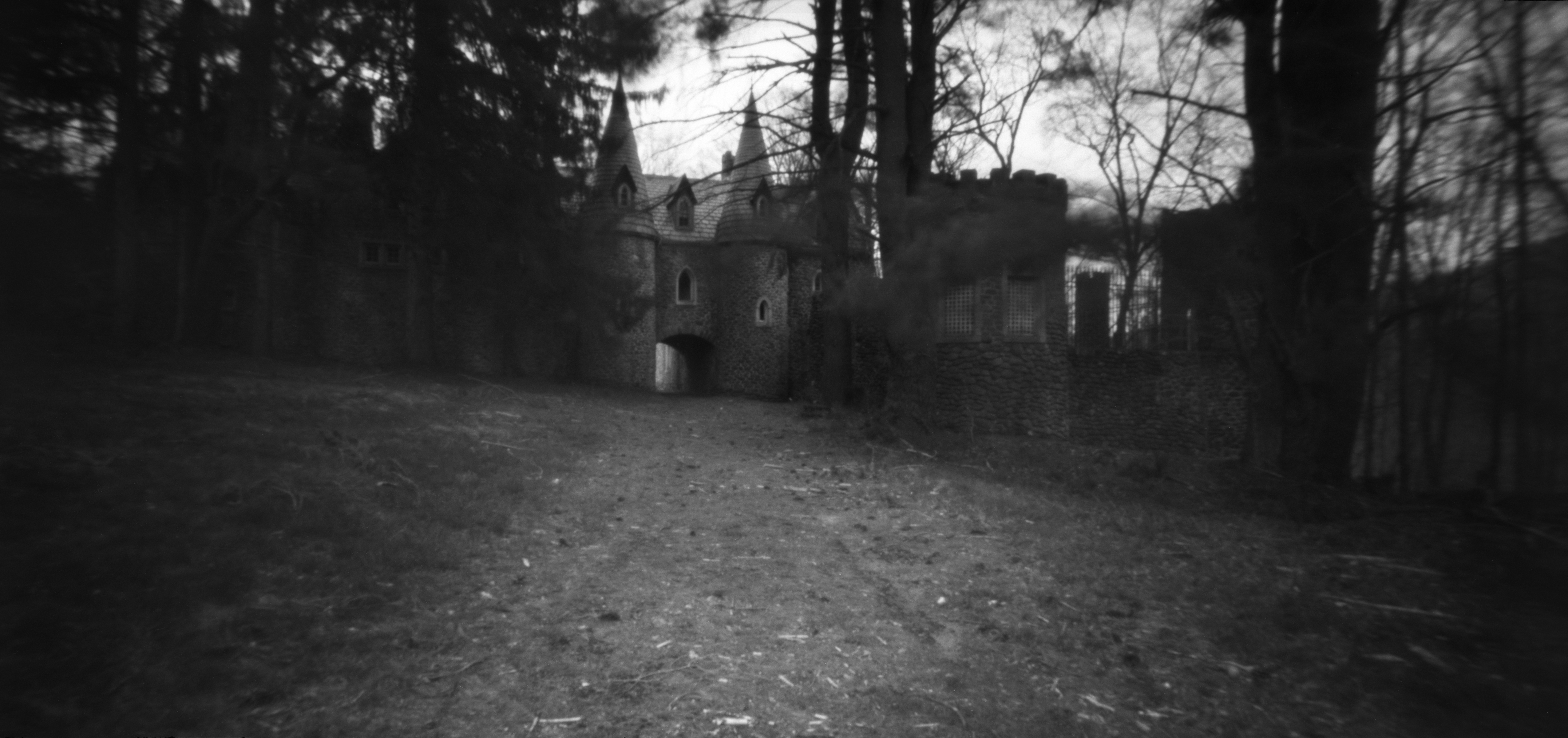
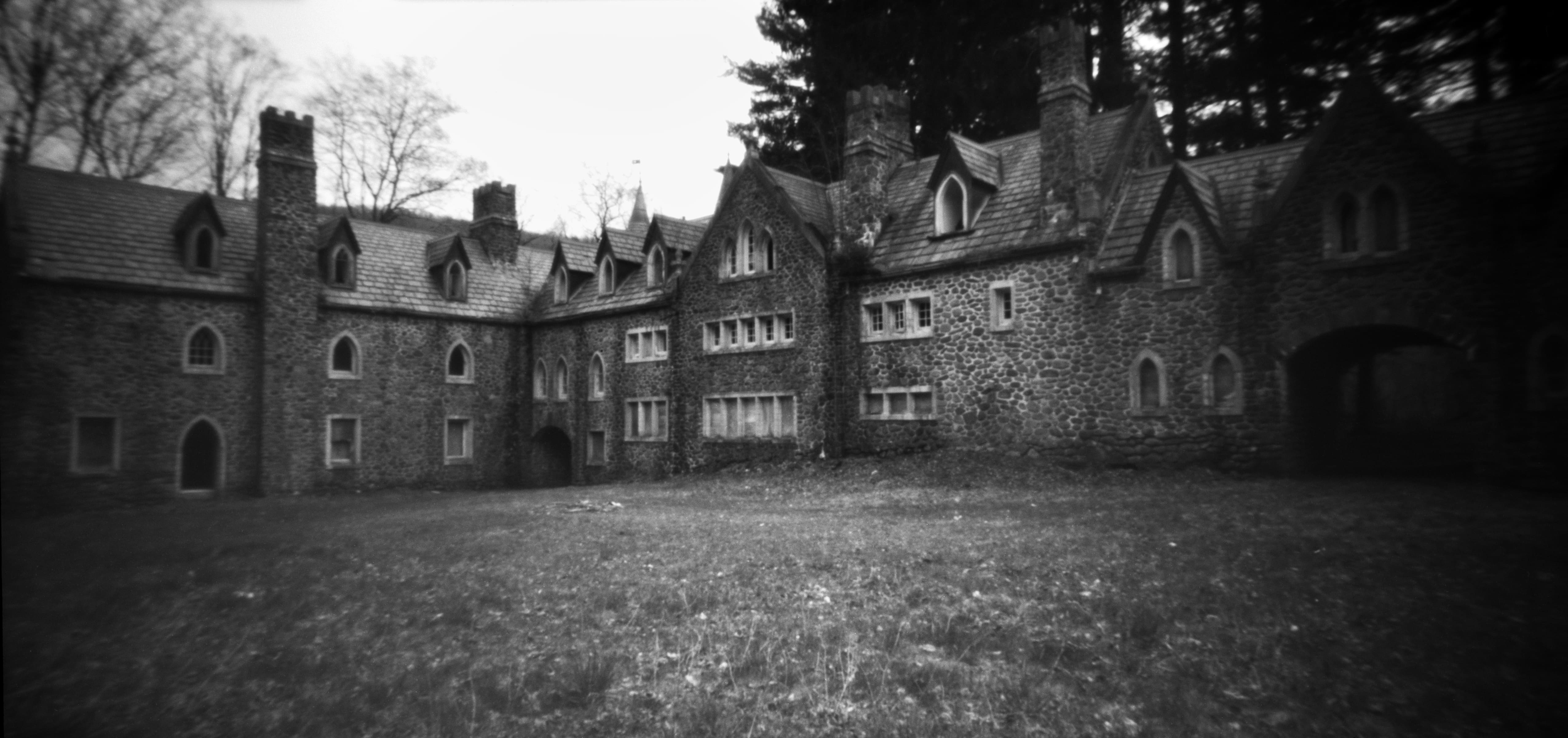
These two images were made in a pinhole camera constructed from a wooden box. Using panchromatic black and white film, the multi-format camera allows for three formats, including panoramic. Because of the extremely small aperture size, the photographs required a much longer exposure time than traditional photography. With the exposures averaging approximately 6-10 minutes in broad daylight, the camera was mounted to a tripod for the duration.
The photographs are of an abandoned mansion in upstate New York. A lot of my photography revolves around abandoned buildings and forgotten history. I was drawn to this location after reading about its construction in the early 1900s; how it was built as a loving tribute from a husband to his wife only to have him die before completion of the home. Because of this, it was never lived in. The mystery surrounding an abandoned location is well captured through pinhole photography due to the softness of the image and infinite depth of field.
I have always been interested in alternative photographic processes and pinhole photography is my favorite. There is an unpredictability and lack of control when it comes to pinhole photography, which lets you fully embrace a freedom that cannot be achieved through traditional camera processes.
Lauren Fedorchak is a senior visual arts major from Fair Lawn, New Jersey. Upon graduating in January, she plans to continue her alternative process photography and pursue an artist residency in the northeast.
My research this summer as a 2013 Department of Energy (DOE) Science Undergraduate Laboratory Intern (SULI) was with the Advanced Buildings Control Team at Pacific Northwest National Laboratory (PNNL). Through heating and cooling, rooftop units (RTUs) consume a very large amount of energy in commercial buildings annually. Therefore, my project focused on validating control strategies that utilize free cooling and the large potential that it may have. Through the use of an air-side diagnostic software tool along with analysis of rooftop unit data, 63 RTUs as part of my contribution to the team. I used this tool to identify and validate free cooling operations of the advanced controller. In order to quantify the results per unit, I generated high level tables showing the Outdoor Air Fraction when the damper was commanded to its minimum and maximum position. Across the portfolio of RTUs in the field, however, I found the data and results indicate that a majority of these units were economizing properly and not experiencing such faults when the controller was on.This internship has further developed my skillset and exceeded my expectations of the productivity that can be accomplished in just ten weeks. The best aspects about working on rooftop units is that I learned an immense amount about the heating and cooling associated with buildings. I plan on continuing in the field of energy efficiency and renewable’s and either through graduate studies or a national laboratory; I will look to again partake in very compelling research.
Nick Denegre is a senior environmental earth science major from Essex, Connecticut. He plans to pursue a professional career in renewable energy technology to combat climate change and further pursue graduate studies in a related field.
Keywords: environmental science, energy, energy conservation, air conditioning